


What Your Dog Eats Is a Story About Their Biology (Not Just the Bag)
Most dog owners are stuck between guilt and confusion when it comes to food. One person says “only raw,” another swears by kibble, a third is cooking turkey and rice at home and their dog looks amazing. Underneath all the opinions, there are a few simple truths: your dog’s body cares about nutrients, digestibility, and stability. The marketing, trends, and buzzwords are for us.
A good dog diet isn’t “fancy,” it’s one that your dog’s body can use easily: protein they can digest, fats that support energy and skin, carbs and fiber that keep the gut steady, and micronutrients that quietly keep everything running.
The Basics: What a Dog’s Body Actually Needs
Dogs don’t need a perfect Instagram label. They need the basics done right.
Protein
Protein is the building material. It repairs muscle, supports the immune system, builds enzymes, and shapes hormones. The important part is not just “high protein” but “high-quality protein.” That means proteins that have a complete amino acid profile and are easy to digest. Animal proteins (like turkey, salmon, lamb, duck) tend to be more complete for dogs than plant proteins.
Fat
Fat is the main slow, steady fuel source for dogs. It supports brain function, hormone balance, skin and coat health, and energy. Good diets use fats that are stable and rich in omega-3 and omega-6 fatty acids. That’s why ingredients like salmon, trout, or flaxseed are helpful: they provide these essential fats naturally.
Carbohydrates
Carbs aren’t evil. They are another energy source and can help keep blood sugar stable when they’re low-glycemic and unprocessed. Problems come from cheap, high-glycemic carbs used as filler. Better carbs include legumes, oats, quinoa, sweet potato, or rice, depending on the formula and your dog’s digestion.
Fiber
Fiber is the “traffic controller” of the gut. It slows down digestion just enough to let nutrients absorb and gives the microbiome (gut bacteria) something to work with. Good fiber leads to consistent, formed stools and less gas.
Vitamins and Minerals
These are the quiet heroes. Calcium and phosphorus for bones, zinc for skin, B-vitamins for energy metabolism, antioxidants like vitamins A, C, and E to protect cells. A “complete and balanced” food that meets AAFCO standards has these built in.
Digestibility and the Microbiome
Two foods can have the same protein percentage on the label but act totally differently inside your dog. That’s where digestibility and the microbiome come in.
Digestibility means: how much of the food actually gets broken down and absorbed.
If food goes in, and most of it comes out as big, soft, chaotic poops, your dog is not using that nutrition well.
The microbiome is the community of bacteria in your dog’s gut. These bacteria help digest food, make some vitamins, and even influence mood and inflammation. They like stability. When you jump from one food to another overnight, those bacteria get wiped out or shocked, and your dog shows it with diarrhea, gas, itchiness, or behavior changes.
That’s why any food change should be done slowly, usually over 10–14 days, mixing a little more of the new food each day. You’re not just changing food—you’re retraining the gut.
Allergies and Sensitivities: Why Limited Ingredient Makes Sense
Most food issues in dogs are not dramatic anaphylactic allergies; they’re slow-burn sensitivities. The dog gets itchy, gassy, has recurring ear infections, or soft stool. The usual triggers? Common proteins they’ve eaten for years, like chicken and beef, or complicated recipes with too many ingredients to track.
This is where limited-ingredient, single-protein diets are useful: they reduce variables so you can see what’s really going on. Fewer ingredients = fewer chances to irritate the immune system.
Why We Like Zignature at Dog On Fun
At Dog On Fun, we decided to stock Zignature food and treats for a reason, not just a label. It fits a specific role in dog diets, especially for dogs with sensitivities.
Here are the key facts about Zignature in plain English, based on how it’s actually formulated:
Zignature Original formulas are generally:
single or limited animal protein recipes (one main meat source per formula), which helps with identifying or avoiding problematic proteins
formulated without grain or chicken in the Original line, which helps dogs who don’t tolerate chicken or certain grains well
made without common allergens like chicken, corn, wheat, soy, and potatoes in their limited-ingredient grain-free recipes
built around low-glycemic ingredients like peas and chickpeas in many formulas, which support steadier blood sugar and more stable energy, especially for dogs that don’t do well on high-glycemic carbs like potato or tapioca
supported with added probiotics in many dry formulas, which help with digestion and gut health
In real life, that means:
easier to use for elimination diets (trying to find out what your dog reacts to)
easier on many sensitive stomachs
helpful if your dog has reacted to “mystery chicken” in other foods
a practical option if you want a clear label and a consistent recipe
We’re not saying “Zignature is the only good food.” We’re saying: it’s a scientifically thought-out, limited-ingredient option that repeatedly helps sensitive dogs, so we keep it in the building for our clients.
Label Reading: Quick, Not Crazy
If you want to get more technical without going insane, here’s how to scan a label in a realistic way:
First ingredients
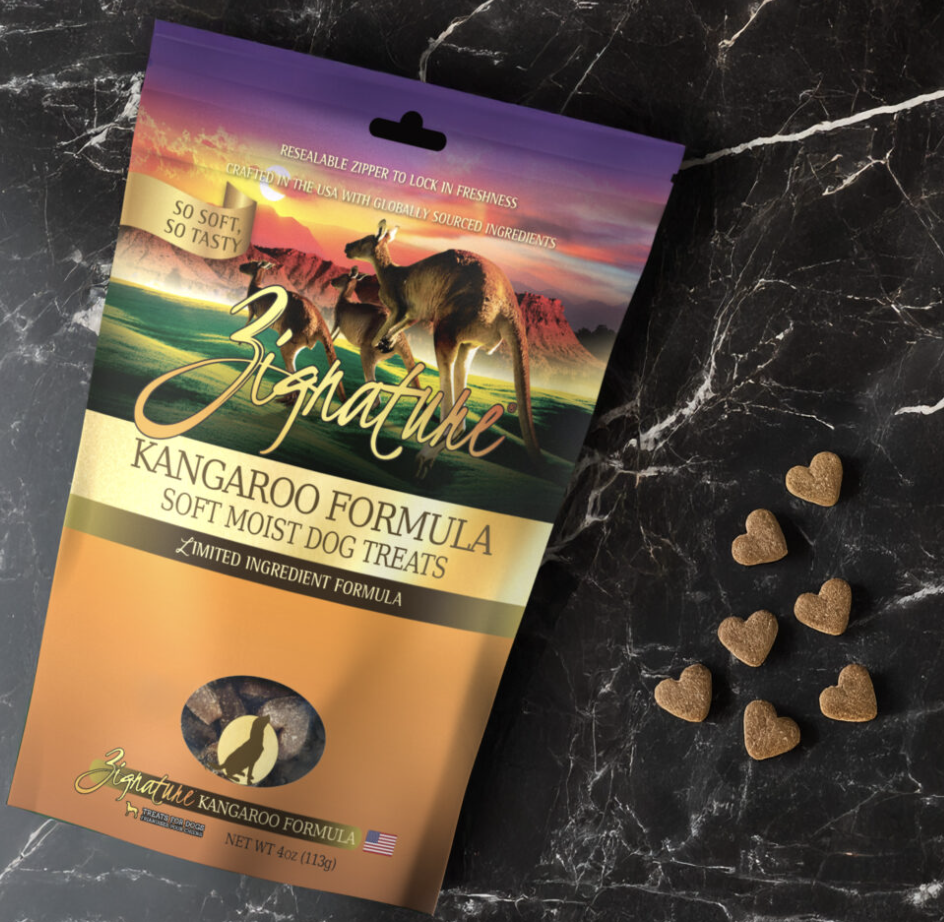
Look at the first two to three ingredients. In many Zignature formulas, you’ll see something like “Turkey” followed by “Turkey meal,” or “Kangaroo” followed by “Kangaroo meal” — that tells you the main protein is coming from actual animal sources, not just flavoring.
Protein and fat
A lot of Zignature recipes sit in the mid-to-high 20s for protein and moderate fat levels, which is appropriate for most adult dogs and active lifestyles.
Carbs and binders
Instead of potatoes, wheat, or corn, they use peas, chickpeas, and sometimes other legumes or grains (in their Select Cuts line). That’s where the low-glycemic idea comes in—those carbs release energy more slowly.
Extras
Look for mention of probiotics, omega-3 sources (like salmon or flax), and named fats. Zignature’s use of legumes plus ingredients like flaxseed helps support fiber and fatty acid intak
If those boxes are checked and your dog’s body says “yep” through good stool, good energy, and healthy skin, that’s a green light.
Where Zignature Fits in the Bigger Diet Picture
In practical terms, this is how we see it at Dog On Fun:
For a dog with no issues
You might be totally fine on another quality food. No need to change just because something is trending.
For a dog with suspected food sensitivities
A single-protein, limited-ingredient diet like many Zignature Original formulas gives you a clean base. You can choose a less-common protein (like lamb, salmon, duck, or kangaroo) that your dog hasn’t eaten before and watch what happens over 6–8 weeks.
For a dog boarding or in daycare with us
We can feed Zignature on-site so the dog is on a stable, well-formulated diet instead of random, last-minute food changes. That’s huge for digestion and reduces stress on their gut while their routine is already different.
For owners who are overwhelmed by choices
Instead of staring at 30 bags in a pet store, starting with something like Zignature gives you:
a clear ingredient panel
no common allergen clutter
a predictable protein source
From there, we can adjust if needed.
How You Know the Diet Is Working
The science is nice, but the body always has the final word. Once your dog has been on a stable diet for a few weeks, ask yourself:
Are they maintaining a healthy weight without constantly adjusting portions?
Is their poop mostly small, formed, and consistent?
Is their coat soft and not constantly flaking or greasy?
Are their ears and paws less itchy than before?
Is their energy stable (not wired then crashed)?
Do they settle and sleep well?
If the answer is yes to most of those on a Zignature diet or any other complete food, that’s a strong sign the nutrition is matching your dog’s biology.
So Where Does This Leave You?
You don’t have to become a canine nutritionist to feed your dog well. You just need to understand a few technical basics: protein quality matters more than buzzwords, fat fuels calm energy, carbs are tools not enemies, the microbiome likes stability, and limited-ingredient diets are powerful when you suspect sensitivities.
At Dog On Fun, we stock Zignature food and treats because it lines up with those principles: single or limited proteins, avoidance of common allergens, low-glycemic ingredient choices, added probiotics, and formulas designed with sensitive dogs in mind.
From there, the real question isn’t “Is Zignature the best food in the world?” It’s:
“Does my dog look and feel great on this food?”
If yes, that’s the science that matters most.